
Pour-Over Coffee Guide: How to make and make clean smooth coffee just like a cafe.
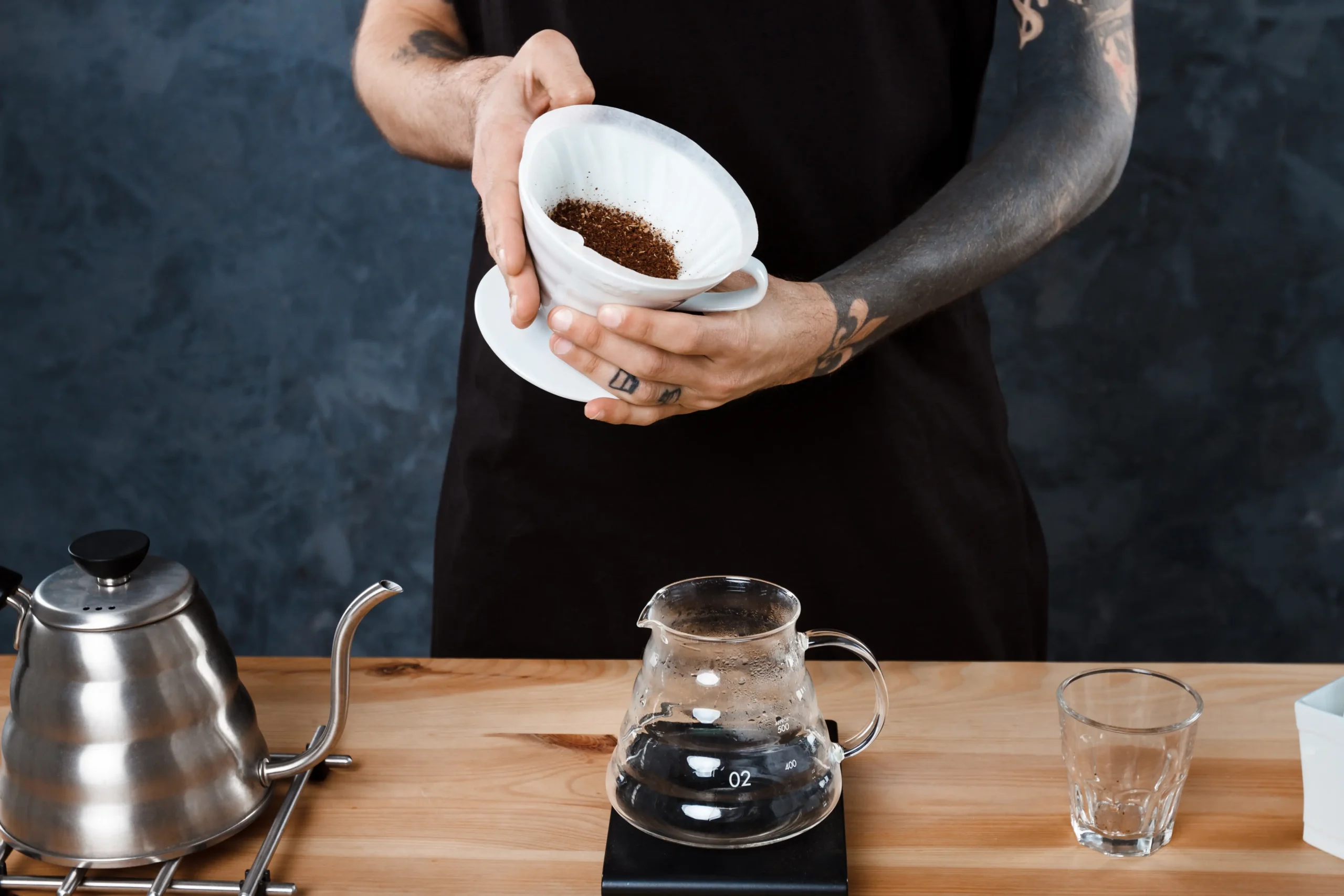
Pour-over coffee is among the most appreciated forms of coffee brewing as it yields a clean and smooth cup which brings out the true taste of the bean used. Pour-over coffee does not feel clogged with instant or too heavy brews. Nevertheless, pour-over appears to be technical to many beginners. They receive watery coffee, bitter coffee, uneven extraction or unsteady results. The fact is pour-over is not difficult when you are guided by a systematic system and manage several important variables.
The first principle is the knowledge of what pour-over really does. To prepare a pour-over, the coffee is brewed gradually through a paper filter and this process filters out oils and fine particles. And that is why it is light and clean. The cup is also clean and hence mistakes are easy to see as well. Put differently, pour-over is transparent. It makes good technique rewarded, and bad technique revealed. When you come to accept this, you will be able to concentrate on bettering the process as opposed to laying the blame on the beans.
The second factor is ratio. Most novices rely on haphazard measurements of the spoons and this produces uneven strength. Pour-over must have a stable coffee-to-water ratio. When you weigh repeatedly, you will have consistency of flavour. Although you may not be using a weighing scale, you should use a consistent method of using a spoon. The scale is however suggested to be used best though pour-over is a precision technique. The basis of consistency is consistency ratio.
The third one is grind size. Pour-over grind must be generally medium such as granulated sugar. In case of excessive grind, the water passes too rapidly and coffee becomes weak or sour. In the case of grind being too fine the water moves too slowly and the coffee will be bitter. The largest pour-over quality control knob is grind. When your pour-over is not right, the action to take is to grind.
The fourth one is water quality and water temperature. Coffee is mostly water. When the water is bad, your coffee is going to be bad. Also, extraction depends on temperature. Excessively hot water in the brewing may extract bitter flavours, and too cold water may bring out sour under-extraction. Balanced extraction will be offered by the stable hot water. Consistency of water is also important as grind consistency.
The fifth step is filter rinsing. It is a difference maker and many beginners do not take it. The paper taste can be added using paper filters. Rinsing not only gets rid of that taste, but also heats the dripper and cup. The pour-over is a temperature sensitive technique. Heating the system serves to keep the extraction steady. This minor step brings a more professional outcome immediately.
The sixth step is bloom. Bloom is dripping a little water at the beginning and letting a few minutes pass by. Fresh coffee releases gases. When you forego bloom, you leave gas bubbles in the way of contacting water and extracting it irregularly. It is even 30-45 seconds bloom time that enhances uniformity. You must have Bloom in case you want cafeteria-type pour-over.
Lastly, when you abandon the pursuit of perfection, and begin the pursuit of repeatability, you will enjoy pour-over. The same ratio, same amount of grind, same amount of water temperature and same method of pouring. It is possible to start with one good cup and then make improvements gradually. Pour-over brewing is not challenging it is practiced. Through practice, you can consistently have clean and tasting coffee in your house similar to the coffee in the cafes.